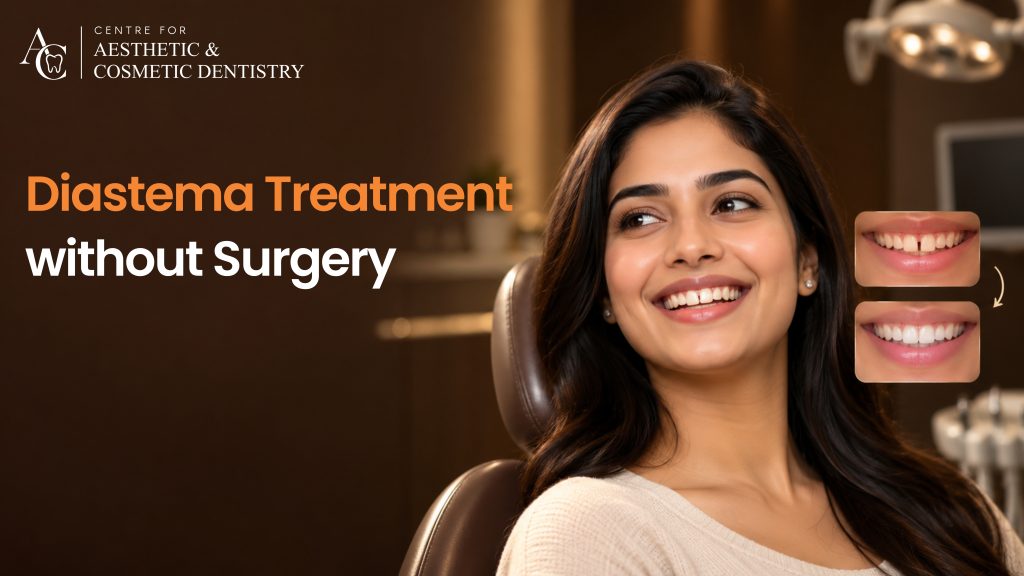
A small gap between your front teeth can be a distinctive part of your smile, but for some people, it affects their confidence or makes them feel self-conscious when speaking and smiling. Known as a diastema, a gap between teeth can occur for several reasons, including differences in tooth size, the position of teeth, habits, or the way the teeth and jaw have developed.
The good news is that diastema treatment without surgery is possible for many patients. Depending on the size of the gap and its underlying cause, options such as composite bonding, porcelain veneers, clear aligners, and orthodontic treatment may help create a more balanced smile without surgical procedures.
However, not every gap should be treated in the same way. The most suitable treatment depends on your oral health, the size and location of the gap, your bite, and the result you want to achieve.
This guide explains the best non-surgical ways to close teeth gaps, how to choose the right treatment, and what to expect during the process.
What Is Diastema?
Diastema is the clinical term for a space between two teeth. It is commonly noticed between the upper front teeth, although gaps can also occur elsewhere in the mouth.
Some gaps are present from childhood and remain unchanged into adulthood. Others develop or become more noticeable over time. A diastema may be related to a mismatch between tooth size and jaw size, missing teeth, a thick or low-attaching labial frenum (the tissue connecting the upper lip to the gum area), tongue habits, or gum disease.
A gap does not automatically mean that something is wrong. If the teeth and gums are healthy and the space is stable, treatment may be a personal cosmetic choice. However, a gap that appears suddenly, increases in size, or occurs alongside bleeding gums or loose teeth should be examined by a dentist.
Understanding why the gap exists is the first step toward choosing an effective treatment.
Can You Close Teeth Gaps Without Surgery?
Yes. Many cases of diastema can be managed using non-surgical dental treatments. The right approach depends on whether the gap is primarily a cosmetic concern or part of a broader alignment or oral health problem.
For example, a small gap between otherwise well-shaped teeth may be closed with composite bonding. If the teeth are tilted or several spaces are present, orthodontic treatment may be more appropriate. Veneers may be considered when a patient also wants to improve the appearance of tooth shape, size, or colour.
Non-surgical does not mean that every case can be corrected with a quick cosmetic procedure. Some patients need gum treatment or other dental care before their gaps can be addressed. A proper examination helps identify the cause and avoid treating only the visible symptom.
Best Ways to Close Teeth Gaps Without Surgery
1. Composite Bonding for Small Gaps
Composite bonding is one of the most straightforward options for closing small spaces between teeth. In this procedure, a tooth-coloured composite resin is carefully applied to the sides of the teeth to create a more balanced appearance and reduce the visible gap.
The dentist selects a suitable shade, shapes the resin to blend with the natural teeth, and polishes the material for a smooth finish. In many cases, bonding can be completed in a single appointment without removing significant amounts of natural tooth structure.
Bonding may be suitable for patients with minor gaps who want a relatively conservative cosmetic improvement. It can also be used to address small chips or uneven tooth edges at the same time.
However, composite resin can stain, chip, or wear over time. The dentist must also assess tooth proportions carefully. Adding too much material can make the teeth look unusually wide or affect how they meet when biting. Bonding is therefore best planned around the natural shape of the smile rather than simply filling the space.
2. Porcelain Veneers for a Smile Makeover
Porcelain veneers are thin, custom-made restorations attached to the front surfaces of teeth. They can improve the appearance of selected teeth by changing their shape, proportions, and colour while reducing the visibility of gaps.
Veneers may be considered when a patient has spacing along with concerns such as uneven tooth shapes, discolouration that does not respond well to whitening, or minor cosmetic irregularities.
Unlike composite bonding, veneer treatment generally involves laboratory fabrication and may require some removal of enamel. The amount depends on the treatment design and the condition of the teeth. Because removing enamel can be irreversible, veneers require careful consideration and should not automatically be the first choice for every gap.
A cosmetic dentist will evaluate whether veneers can produce a natural-looking result while preserving as much healthy tooth structure as possible. Patients should also understand that veneers may eventually need repair or replacement.
3. Clear Aligners for Teeth Gaps
Clear aligners are transparent, removable trays designed to move teeth gradually into planned positions. They may be suitable when gaps are caused by tooth positioning or when several spaces need to be corrected together.
Unlike bonding, which changes the visible shape of a tooth, orthodontic treatment changes the position of the teeth themselves. This can be beneficial when spacing is associated with rotations, crowding in other areas, or certain bite concerns.
Treatment typically involves a series of aligners worn according to the dentist’s instructions, with progress reviewed at scheduled appointments. The trays are generally removed for eating, drinking anything other than water, and cleaning the teeth.
Clear aligners require consistent wear and may not be suitable for every orthodontic problem. The dentist must assess your bite, gum health, tooth positions, and the cause of the gap before recommending them.
After orthodontic treatment, retainers are important because teeth can shift again. Closing the gap is only one part of the process; keeping the teeth in their new positions matters too.
4. Traditional Orthodontic Braces
Braces are another non-surgical option for closing gaps. They use brackets and wires to guide teeth into planned positions over time. Depending on the diagnosis, braces may be appropriate for patients who have multiple spaces, more involved alignment concerns, or bite problems that require comprehensive orthodontic treatment.
Although braces are more visible than clear aligners, they can provide precise control over tooth movement in many cases. The choice between braces and aligners depends on the individual treatment needs, lifestyle preferences, and clinical recommendations.
Both approaches require good oral hygiene, regular reviews, and commitment throughout treatment. A dentist or orthodontist can explain which option is most suitable for your specific case.
5. Treating the Underlying Cause of the Gap
Sometimes, closing a gap requires more than changing the position or appearance of the teeth. If the space is associated with gum disease, the underlying gum condition needs attention. Gum inflammation and loss of supporting tissue can cause teeth to move apart, and simply covering the gap may not address the problem.
In certain cases, the labial frenum may contribute to a space between the upper front teeth. However, the presence of a prominent frenum does not automatically mean that surgery is necessary. The dentist will assess its role and determine whether orthodontic or cosmetic treatment is appropriate.
If a gap is caused by a missing tooth or a larger dental issue, the treatment plan may be different again. A diagnosis helps ensure that the recommended approach addresses the actual cause rather than just the appearance.
Which Diastema Treatment Is Best for You?
The best treatment depends on the size of the gap, the position and shape of the teeth, your oral health, and whether you want to change tooth alignment, appearance, or both.
| Treatment option | Often considered for | Main consideration |
|---|---|---|
| Composite bonding | Small gaps and minor cosmetic changes | Resin may stain or chip and may need maintenance |
| Porcelain veneers | Gaps with additional concerns about tooth shape or colour | May require irreversible enamel removal |
| Clear aligners | Gaps caused by tooth positioning or multiple spaces | Requires consistent wear and retention afterward |
| Traditional braces | More involved alignment or bite concerns | Treatment duration and visibility vary by case |
| Treatment of gum or other underlying problems | Gaps associated with oral health concerns | The underlying condition must be addressed first |
These are general guidelines, not a substitute for an examination. Some patients may benefit from a combination of treatments, while others may not need gap closure at all.
What Happens During Diastema Treatment?
The process usually begins with a consultation to understand your concerns and examine your teeth and gums. Your dentist may assess your bite, tooth proportions, gum health, and whether the gap has changed over time. Photographs, digital scans, or X-rays may be recommended when clinically appropriate.
Once the cause is understood, your dentist can discuss the available options and explain the benefits, limitations, estimated treatment duration, and maintenance needs of each approach. If you choose bonding or veneers, the focus will be on creating natural tooth proportions and a harmonious smile. If aligners or braces are recommended, the plan will focus on moving the teeth safely into their intended positions.
Before starting, ask how the result will be maintained and whether you may need retainers or future repairs. Understanding the entire process can help you make an informed decision.
Is Diastema Treatment Painful?
Most non-surgical options for closing teeth gaps involve little or manageable discomfort, although the experience varies.
Composite bonding is often comfortable and may not require anaesthesia. Veneer preparation may involve local anaesthesia depending on the procedure. Clear aligners and braces can cause temporary pressure or soreness, particularly after starting treatment or making an adjustment.
Your dentist will explain what to expect based on the selected treatment. Contact the clinic if you experience severe or persistent pain, swelling, or other symptoms that do not seem typical.
How Much Does Diastema Treatment Cost?
The cost of closing teeth gaps varies according to the treatment selected, the number of teeth involved, the complexity of the case, and whether other dental care is required.
Composite bonding may involve fewer clinical steps than orthodontic treatment, while veneers can include laboratory and restoration costs. Clear aligner or braces treatment may involve planning, appliances, progress reviews, and retainers. These options should not be compared on price alone because they solve different types of problems.
During your consultation, ask for a clear estimate and confirm what is included. The most appropriate option is one that suits your dental condition and long-term goals, not simply the one with the lowest initial cost.
Diastema Treatment by Dr Mohan Rayapudi
If you are considering closing a gap between your teeth, a personalised consultation can help you understand which options are appropriate for your smile. The Center for Cosmetic & Aesthetic Dentistry by Dr Mohan Rayapudi focuses on assessing cosmetic dental concerns and discussing treatment options according to individual needs.
With 50000+ Happy Patients, the clinic offers patients an opportunity to discuss their smile goals and learn about suitable cosmetic dental approaches. It has 2 branches in Hyderabad at Kondapur, Kukatpally, giving patients locations to consider when arranging a consultation.
Your dentist can evaluate the size and cause of the gap, examine your gum health and bite, and explain whether bonding, veneers, clear aligners, braces, or another approach may be suitable. The recommendation should be based on your dental needs and the long-term health of your teeth.
A gap between your teeth does not necessarily require surgery or extensive treatment. For many patients, non-surgical options can improve the appearance of the smile, but the right solution depends on the cause of the gap and the condition of the teeth and gums.
At Center for Cosmetic & Aesthetic Dentistry by Dr Mohan Rayapudi, you can discuss your concerns, explore appropriate treatment choices, and understand what each option involves before making a decision.
Book a dental consultation to explore your diastema treatment options. With a personalised assessment and a clear treatment plan, you can make an informed choice about closing teeth gaps while protecting your oral health.
FAQs About Diastema Treatment Without Surgery
1. Can a gap between front teeth be closed without surgery?
Yes. Depending on the cause and size of the gap, options such as composite bonding, veneers, clear aligners, and braces may close or reduce it without surgery. An examination helps identify the most appropriate method.
2. What is the quickest way to close a small gap between teeth?
Composite bonding can often close a small cosmetic gap in a single appointment. However, it may not be the best choice if the gap is caused by tooth positioning or a bite concern. Your dentist can explain the most suitable option after examining your teeth.
3. Are clear aligners effective for closing teeth gaps?
Clear aligners can be effective for many types of spacing when the case is suitable for orthodontic treatment. Success depends on the diagnosis, treatment plan, and consistent wear. Retainers are usually needed afterward to help maintain the result.
4. Are veneers better than bonding for diastema?
Neither option is universally better. Bonding is often more conservative for small gaps, while veneers may be considered when changes to tooth shape or colour are also desired. Veneers can involve irreversible enamel removal, so the benefits and alternatives should be discussed before treatment.
5. Can teeth gaps return after treatment?
Yes. Teeth can shift after bonding, veneers, or orthodontic treatment for different reasons. After orthodontic treatment, wearing retainers as instructed is especially important. Bonding and veneers may also require maintenance over time.