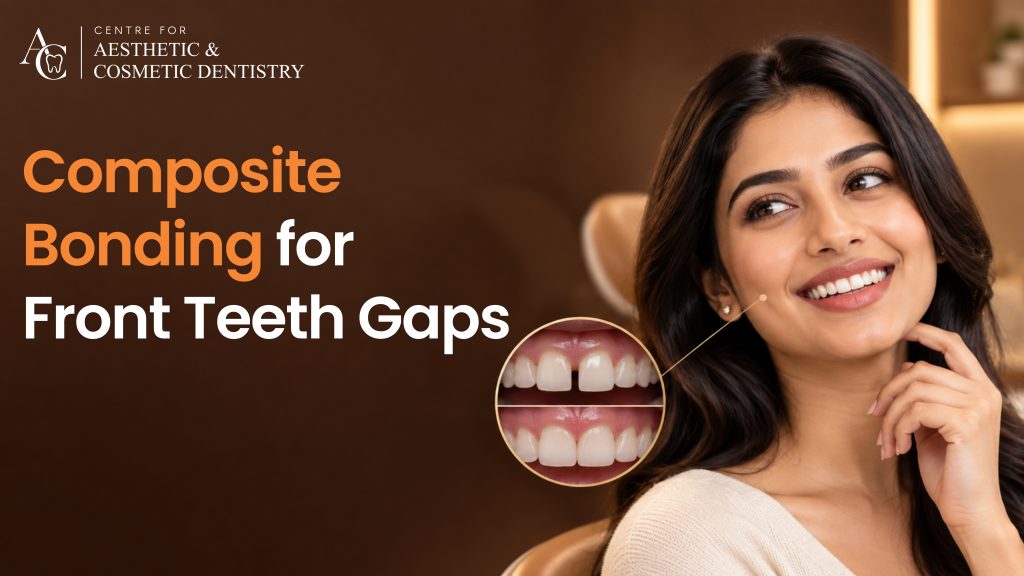
A gap between the front teeth, medically known as a diastema, is a common dental concern. For some people, the gap is a natural feature they are happy with. For others, a noticeable space between the upper front teeth can affect the appearance of their smile and make them feel self-conscious in photographs or social situations.
If you want to close the gap without undergoing lengthy orthodontic treatment, composite bonding for a gap between front teeth may be an option worth exploring. This cosmetic dental procedure uses a tooth-coloured resin material to reshape the teeth and reduce the visible space between them. In suitable cases, composite bonding can be completed in a single dental visit, making it an appealing choice for people looking for a relatively quick smile enhancement.
However, can composite bonding close a wide gap between front teeth in just one visit? The answer depends on the size of the gap, the shape and position of your teeth, your bite, and the result you want to achieve.
Understanding how composite bonding works, when it is suitable, and when alternatives may be more appropriate can help you make an informed decision about your smile.
What Is Composite Bonding for Front Teeth Gaps?
Composite bonding is a cosmetic dental treatment in which a tooth-coloured resin material is applied to the surface of a tooth and shaped to improve its appearance. The material is selected to blend with the natural colour of your teeth, helping create a more uniform smile.
When closing a gap between the front teeth, the dentist carefully adds composite resin to the sides of the teeth bordering the space. The material is shaped to make the teeth appear wider and reduce the visible gap. A special curing light hardens the resin, after which the dentist refines and polishes the surface.
Unlike orthodontic treatment, which gradually moves teeth into different positions, composite bonding changes the visible shape of the teeth. This distinction is important when deciding whether bonding is appropriate for your situation.
For people with small or moderate gaps and suitably shaped teeth, bonding can provide an attractive result without removing much, if any, natural tooth structure. The treatment is often completed in one appointment, depending on the complexity of the case.
Can Composite Bonding Close a Wide Gap Between Front Teeth in One Visit?
Yes, composite bonding can sometimes close a wide gap between front teeth in one visit, but it is not the ideal solution for every wide gap.
The feasibility depends on how much space needs to be filled and how the teeth will look once the material is added. A dentist must consider not only whether the gap can be covered, but also whether the final teeth will have natural proportions.
For example, when a gap is relatively small, adding a modest amount of composite resin to the neighbouring teeth may create a balanced result. With a wider gap, however, a larger amount of material may be needed. This can make the front teeth look unusually broad or bulky if the treatment is not carefully planned.
The dentist will also assess the position of the teeth, the relationship between the upper and lower teeth, and the health of the gums. If the gap is caused by teeth that are significantly misaligned, or if there is an underlying bite concern, simply adding material may not address the main problem.
In selected cases, a wide gap can be reduced or closed with composite bonding during one visit. In other cases, orthodontic treatment, veneers, or a combination of approaches may produce a more balanced and stable result.
The best way to know whether single-visit composite bonding is right for you is to have your teeth examined by a dentist experienced in cosmetic dentistry.
How Does Composite Bonding Close a Gap Between Front Teeth?
The procedure is usually straightforward, although the exact steps depend on your dental condition and the size of the gap.
Smile Assessment and Treatment Planning
The dentist first examines your front teeth, gums, bite, and the space you want to close. They may assess the width and length of your teeth, the symmetry of your smile, and how your teeth appear when you speak or smile naturally.
This planning stage is especially important for wide gaps. The aim is to determine how much composite material can be added while maintaining natural-looking proportions.
Shade Selection and Tooth Preparation
The dentist selects a composite resin shade that blends with your natural teeth. In many cases, little or no tooth preparation is needed, although the surface may be treated to help the bonding material adhere securely.
A bonding agent is applied as required, preparing the tooth for the composite resin.
Applying and Shaping the Composite Resin
The dentist carefully applies the resin to the sides of the teeth bordering the gap. The material is shaped to create a smooth transition between the natural tooth and the bonded area.
This step requires an artistic eye as well as technical skill. The dentist must balance the width of the teeth, their contours, and the overall symmetry of the smile. Simply filling the gap without considering these details may create teeth that look too wide or unnatural.
Hardening, Polishing, and Final Adjustments
A special curing light is used to harden the composite material. The dentist then refines the shape, checks the bite, and polishes the bonded areas to achieve a smooth, natural-looking finish.
In suitable cases, the gap can be closed during the same appointment. Larger or more complex cases may require additional planning or a different treatment approach.
How Long Does Composite Bonding Take?
One of the main advantages of composite bonding is that it is often completed in a single visit.
The time required depends on the number of teeth being treated, the width of the gap, and the complexity of the desired result. A straightforward case may take considerably less time than a complex smile enhancement involving multiple teeth.
Because composite bonding is usually minimally invasive, it often does not require the multiple preparation and fitting appointments associated with some other cosmetic treatments.
However, a quick procedure should never replace proper planning. Taking time to assess tooth proportions, colour, and bite helps the dentist create a result that looks natural and functions comfortably.
Benefits of Composite Bonding for Closing Front Teeth Gaps
Composite bonding is popular because it offers a relatively conservative way to improve the appearance of a smile.
One major benefit is the potential for same-day results. For suitable cases, patients can leave the dental clinic with a visibly reduced or closed gap after a single appointment. This can be particularly appealing if you have an upcoming event or prefer a treatment that fits into a busy schedule.
Another advantage is that composite bonding generally preserves more natural tooth structure than treatments that require significant reshaping. In many cases, little or no enamel removal is necessary. This makes it an option worth discussing if you prefer a minimally invasive cosmetic approach.
The resin is also colour-matched to the surrounding teeth and can be shaped to suit your smile. If the bonded material chips or wears over time, it can often be repaired or touched up, depending on the condition of the restoration.
Composite bonding may also cost less initially than some alternatives, although the overall value depends on the size of the treatment, maintenance needs, and how long the result lasts.
Composite Bonding vs Veneers vs Braces for a Front Teeth Gap
Not every gap should be treated in the same way. The most suitable option depends on the reason for the gap, your dental health, and your cosmetic goals.
| Treatment | How It Closes the Gap | Typical Treatment Time | Important Consideration |
| Composite bonding | Adds tooth-coloured resin to reshape the teeth | Often one visit | Wide gaps may make teeth look too broad |
| Dental veneers | Covers the front surface of teeth to change shape and appearance | Usually requires planning and one or more visits | May involve enamel preparation and is not suitable for every case |
| Orthodontic treatment | Gradually moves teeth into planned positions | Usually several months or longer | Addresses tooth position rather than simply adding material |
Composite bonding is often worth considering when the gap can be closed while preserving natural tooth proportions. Veneers may be discussed when several cosmetic concerns need to be addressed together, while orthodontic treatment may be more appropriate when the teeth themselves need to move.
Your dentist can explain the advantages and limitations of each option after examining your teeth.
What Are the Limitations of Composite Bonding for Wide Gaps?
Although composite bonding can deliver impressive cosmetic improvements, it has limitations that are particularly important when treating wide gaps.
The first concern is tooth proportion. If a large amount of resin is added to the sides of the front teeth, the teeth may appear wider than their natural shape would suggest. This can affect the harmony of the smile, especially when viewed from the front.
The second concern is durability. Composite resin can chip, stain, or wear over time. The risk depends on factors such as the amount of material used, your bite, oral habits, and how well you maintain the bonded teeth. Very large additions may be exposed to greater functional forces in some cases.
The third concern is the underlying cause of the gap. A space between the front teeth may be related to tooth size, tooth position, the tissue connecting the upper lip to the gums, or other dental factors. If the underlying issue requires treatment, simply covering the gap may not be the best long-term approach.
For these reasons, the goal should not be to close every gap with composite resin at any cost. It should be to find the most suitable treatment for your smile.
How Long Does Composite Bonding Last?
Composite bonding can last for several years, but its lifespan varies from person to person. The size and location of the bonded area, the material used, your bite, and your daily habits can all affect durability.
Good oral hygiene is essential. Brush twice daily with a fluoride toothpaste, clean between your teeth, and attend routine dental check-ups. Avoid using your front teeth to bite hard objects or open packaging, as this can damage both natural teeth and bonded material.
If you grind or clench your teeth, let your dentist know. Depending on your situation, they may recommend additional measures to protect the bonding.
The bonded areas may also need polishing, repair, or replacement over time. Regular reviews help your dentist identify changes early and advise you about maintenance.
Who Is a Good Candidate for Composite Bonding?
Composite bonding may be suitable if you have a gap between your front teeth, healthy teeth and gums, and enough space to achieve a balanced result by adding material.
It may be particularly appropriate when the teeth bordering the gap are relatively well aligned and the desired change can be achieved without making them look disproportionately wide.
However, patients with active gum disease, untreated tooth decay, significant bite problems, or extensive tooth misalignment may need other treatment before or instead of bonding. Wide gaps should be assessed carefully to establish whether bonding alone can provide a natural-looking result.
A cosmetic dental consultation allows you to discuss your expectations, understand the available options, and decide on a treatment plan that suits your dental needs.
Center for Cosmetic & Aesthetic Dentistry by Dr Mohan Rayapudi
Choosing the right dentist is an important part of achieving a natural-looking result. Closing a front teeth gap requires more than adding resin; it involves careful attention to tooth proportions, shade matching, surface texture, and the way the teeth work together when you bite.
The Center for Cosmetic & Aesthetic Dentistry by Dr Mohan Rayapudi focuses on helping patients understand cosmetic dental options suited to their individual smiles. During a consultation, you can discuss whether composite bonding is appropriate for your gap or whether another approach may offer a more balanced outcome.
The clinic is well known for 50000+ Happy Patients, reflecting its stated patient-care milestone. A personalized assessment remains essential because each person’s tooth shape, bite, and cosmetic goals are different.
For patients seeking dental care in Hyderabad, the clinic has 2 clinics in Hyderabad at Kondapur, Kukatpally, offering locations to consider when planning a consultation
A gap between your front teeth does not always require lengthy orthodontic treatment. For suitable cases, composite bonding can offer a convenient way to reduce or close the space, sometimes in just one visit.
The most important consideration is whether the treatment will create a balanced, natural-looking smile without making your teeth appear too wide or compromising their function. A wide gap may need a more detailed assessment, and in some cases, orthodontics or veneers may be a better option.
If you are considering composite bonding for a wide gap between front teeth, the next step is a professional consultation. The Center for Cosmetic & Aesthetic Dentistry by Dr Mohan Rayapudi can help you understand your options and determine which approach best suits your smile.
Ready to feel more confident about your smile? Arrange a consultation to discuss your front teeth gap, explore suitable cosmetic treatments, and find out whether composite bonding can help you achieve the result you want.
FAQs
Can composite bonding close a wide gap between front teeth in one visit?
Yes, it can in selected cases. The dentist must assess the width of the gap, the shape of the front teeth, and the bite to determine whether the space can be closed without making the teeth look too wide. More complex cases may benefit from an alternative treatment plan.
Is composite bonding painful?
Composite bonding is generally a comfortable procedure and often does not require local anaesthesia, particularly when little or no tooth preparation is needed. Your dentist will explain what to expect based on your individual case.
Is composite bonding better than veneers for closing a gap?
Neither option is best for everyone. Composite bonding is often more conservative and may be completed in one visit, while veneers may be considered when more extensive cosmetic changes are needed. The right choice depends on tooth proportions, dental health, and your desired result.
Will my teeth look bigger after composite bonding?
They can look wider because resin is added to the sides of the teeth. A skilled dentist carefully plans the shape and proportions to avoid an overly bulky appearance. This is particularly important when closing a wide gap.
Can composite bonding close a gap without braces?
Yes, in suitable cases. Bonding changes the shape of the teeth to reduce the visible space, while braces or clear aligners move teeth into different positions. If the gap is caused by significant misalignment, orthodontic treatment may be more appropriate.