A bright, confident smile can make a meaningful difference in how you feel about your appearance. However, white patches, yellowish areas, or brown stains on your teeth can sometimes make you hesitant to smile openly. If you notice these changes despite brushing regularly, dental fluorosis may be one possible explanation.
Dental fluorosis treatment in Hyderabad offers several aesthetic options to improve the appearance of affected teeth. Depending on the severity of fluorosis, the colour changes, and the condition of your enamel, treatment may involve professional whitening, enamel microabrasion, resin infiltration, composite bonding, or porcelain veneers.
The right solution is not necessarily the most extensive treatment. A careful dental assessment can help identify the cause of the discolouration and determine which option may improve your smile while preserving as much natural tooth structure as possible.
At the Center for Cosmetic & Aesthetic Dentistry by Dr Mohan Rayapudi, patients can explore cosmetic dental solutions based on their individual concerns and smile goals. This guide explains what dental fluorosis is, why it develops, and which modern aesthetic treatments may help restore a more uniform-looking smile.
What Is Dental Fluorosis?
Dental fluorosis is a change in the appearance of tooth enamel that occurs when developing teeth are exposed to excessive fluoride during enamel formation. This exposure typically happens during childhood, while the permanent teeth are developing beneath the gums.
Fluoride plays an important role in preventing tooth decay. However, excessive intake during tooth development can affect how enamel forms, resulting in visible changes after the teeth erupt.
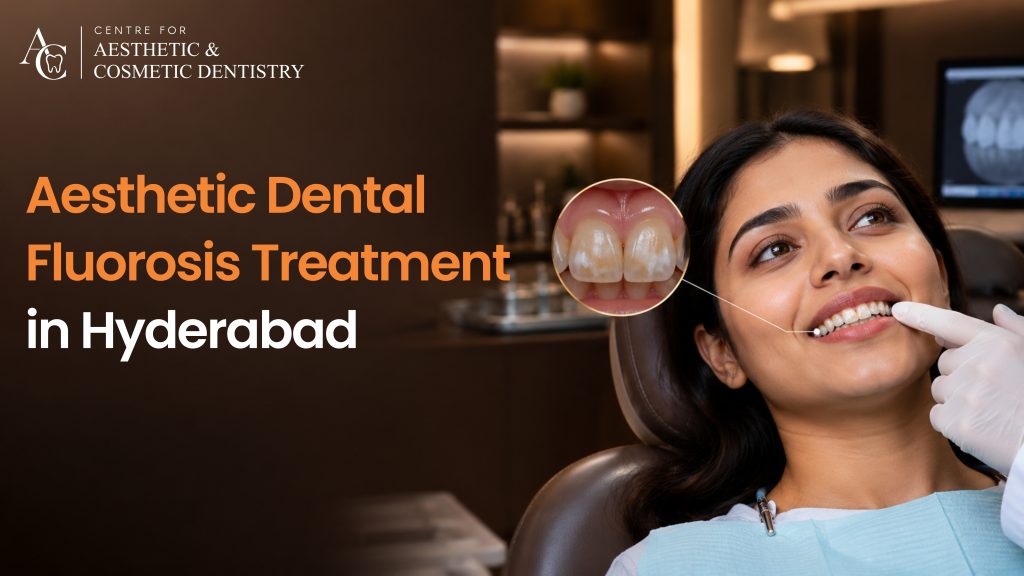
Dental fluorosis may appear as faint white lines, cloudy patches, chalky areas, or brown staining. In more pronounced cases, the enamel may have surface irregularities or pitting.
Fluorosis affects the appearance of the enamel, and its severity varies considerably. Mild cases may cause only subtle white markings, while more severe cases can involve noticeable discolouration and changes in the enamel surface.
It is important to distinguish fluorosis from other causes of tooth discolouration, including early tooth decay, developmental enamel defects, trauma, and staining. A dentist can examine the teeth and assess your dental history before recommending treatment.
What Causes Dental Fluorosis?
Dental fluorosis develops during tooth formation rather than from fluoride exposure after the teeth have fully developed. Excessive fluoride intake during childhood can come from several sources, including swallowing fluoride toothpaste repeatedly, drinking water with naturally high fluoride levels, or receiving fluoride from multiple sources.
The risk depends on the amount of fluoride consumed, the duration of exposure, and the stage of tooth development. Fluorosis is not caused simply by using fluoride toothpaste correctly as an adult.
Once the enamel has formed, the appearance of fluorosis does not continue to develop from later fluoride exposure. However, the existing markings may become more noticeable as teeth age or as surrounding enamel changes in appearance.
If you are concerned about white or brown patches, avoid assuming that fluorosis is the cause. A professional examination can help establish the likely diagnosis and rule out conditions that need a different type of care.
How Does Dental Fluorosis Affect Your Smile?
For many people, the main concern is cosmetic. White streaks or cloudy patches can stand out against the surrounding enamel, particularly under bright lighting. Brown staining may create more pronounced colour differences, while deeper enamel changes can make the surface appear uneven.
The impact often depends on the location and severity of the markings. A person with mild fluorosis may notice the changes only in photographs, while someone with more visible discolouration may feel uncomfortable smiling or speaking in social settings.
Fluorosis does not automatically mean that the teeth are unhealthy or weak. Mild fluorosis often causes cosmetic changes without significant functional problems. More severe cases may involve pits or enamel irregularities that require additional assessment and care.
The aim of aesthetic treatment is to improve the overall appearance of the teeth while protecting their structure and supporting long-term oral health.
Modern Treatment Options in Hyderabad
There is no single treatment that works best for every case. Your dentist will consider the depth of the discolouration, the presence of enamel defects, your natural tooth colour, and your expectations before recommending a solution.
1. Professional Teeth Whitening
Professional whitening may be considered when the main concern is general yellowing or staining and the enamel is otherwise suitable for treatment. It uses dentist-supervised whitening products to lighten the natural tooth colour.
However, whitening does not remove the underlying enamel changes caused by fluorosis. In some cases, making the surrounding enamel lighter may improve the overall appearance; in others, it can make white patches more noticeable because the affected areas respond differently from the surrounding teeth.
For this reason, whitening should not be assumed to be the best first treatment for every patient with fluorosis. A dentist can assess whether whitening alone is likely to meet your expectations or whether another approach would produce a more uniform result.
2. Enamel Microabrasion
Enamel microabrasion is a conservative procedure that removes a very thin outer layer of enamel using a controlled combination of an abrasive agent and a suitable acidic medium applied by a dental professional.
It may help reduce certain superficial white or brown discolorations. Because the procedure removes some enamel, it is not appropriate for every type or severity of fluorosis.
Your dentist will evaluate how deep the markings appear to be and whether microabrasion is likely to improve them. In selected cases, it may be combined with other aesthetic treatments for a more balanced result.
3. Resin Infiltration
Resin infiltration is a minimally invasive technique that may help reduce the visibility of certain white enamel lesions. A low-viscosity resin is introduced into porous areas of enamel, changing the way light passes through the affected region and potentially making the markings less noticeable.
This technique is particularly associated with selected white-spot lesions, and its suitability for fluorosis depends on the appearance and depth of the affected enamel. It may not be appropriate for brown staining, deeper defects, or every type of fluorosis.
An examination helps determine whether resin infiltration is a realistic option and whether additional treatment may be needed.
4. Composite Bonding
Composite bonding uses tooth-coloured resin to mask selected discoloured areas or improve the shape of teeth. The material is carefully matched, applied, shaped, and polished to blend with the surrounding enamel.
Bonding may be useful when fluorosis causes noticeable colour differences or minor surface irregularities that cannot be adequately improved with more conservative methods.
The procedure can often be completed without extensive removal of natural tooth structure. However, composite resin can stain, chip, or wear over time and may require maintenance. The dentist must also consider tooth proportions to avoid making the treated teeth look bulky or unnatural.
5. Porcelain Veneers
Porcelain veneers are thin, custom-made restorations bonded to the front surfaces of selected teeth. They may be considered for more pronounced discolouration or when fluorosis is accompanied by concerns about tooth shape and surface appearance.
Veneers can provide substantial control over colour and aesthetics, but treatment may require removing some enamel. This can be irreversible, so veneers should be considered only after discussing more conservative alternatives.
A careful assessment is especially important when the enamel has significant irregularities or defects. The dentist must determine whether the teeth can support the proposed restorations and explain the long-term maintenance involved.
Which Fluorosis Treatment Is Right for You?
The best approach depends on how the fluorosis appears and how much of the enamel is affected. Mild white markings may respond to conservative options, while deeper discolouration or surface defects may require a different treatment strategy.
| Treatment option | May be considered for | Important consideration |
|---|---|---|
| Professional whitening | General yellowing or selected staining concerns | May not mask white fluorosis patches and can sometimes make contrast more noticeable |
| Enamel microabrasion | Certain superficial enamel discolourations | Removes a small amount of enamel and is not suitable for every case |
| Resin infiltration | Selected white enamel lesions | Suitability depends on the type and depth of the affected area |
| Composite bonding | Localised discolouration or minor surface irregularities | May require polishing, repair, or replacement over time |
| Porcelain veneers | More pronounced aesthetic concerns in suitable teeth | May require irreversible enamel removal and ongoing maintenance |
These options are general examples rather than a personal treatment recommendation. Some patients may benefit from a combination of methods, while others may need no treatment if the appearance of their teeth does not concern them.
What to Expect During a Fluorosis Treatment Consultation
A dental consultation usually begins with a discussion about what you notice when you look at your teeth and what you would like to improve. Your dentist will examine the colour, surface, and condition of the enamel and may ask when you first noticed the markings.
The assessment helps distinguish fluorosis from other causes of white spots or discolouration. Photographs may be used to document the appearance of the teeth and support treatment planning. Additional tests or imaging may be recommended when clinically necessary.
Once the likely cause and severity are established, your dentist can explain suitable options, their limitations, and the expected maintenance. You should understand whether the recommended procedure is reversible, minimally invasive, or involves permanent changes to the teeth.
A realistic treatment plan should aim for a natural-looking improvement rather than promising perfectly uniform teeth in every case.
Is Dental Fluorosis Treatment Painful?
The level of discomfort depends on the procedure. Professional whitening can cause temporary tooth sensitivity or gum irritation. Microabrasion is generally performed with controlled techniques, while bonding and veneers may involve different levels of tooth preparation depending on the case.
If enamel defects are significant or another dental condition is present, the dentist may recommend additional care before cosmetic treatment.
Tell your dentist if you already experience tooth sensitivity or discomfort. This information can help guide the choice of treatment and the precautions used during the procedure.
Why Choose Dr Mohan Rayapudi?
Choosing a dental clinic for fluorosis treatment involves more than selecting a cosmetic procedure. You need an assessment that identifies the cause of the discolouration and considers how to improve the appearance of your teeth while preserving healthy enamel.
The Center for Cosmetic & Aesthetic Dentistry by Dr Mohan Rayapudi offers a setting where patients can discuss cosmetic dental concerns and explore suitable treatment options based on their individual needs. With 50000+ Happy Patients, the clinic highlights its patient experience while helping individuals understand their choices for improving their smiles.
The practice has 2 clinics in Hyderabad at Kondapur, Kukatpally, providing locations for patients to consider when arranging a consultation.
During your appointment, ask which treatment is most suitable for your type of fluorosis, whether a conservative approach is possible, and what results you can realistically expect. You should also understand the potential risks, maintenance requirements, and total cost before deciding.
Dental fluorosis does not look the same in every person, so treatment should never be based on appearance alone. From conservative procedures for mild white markings to bonding or veneers for more pronounced concerns, modern aesthetic dentistry offers several ways to improve the look of affected teeth.
The most useful first step is a professional assessment to identify the cause of the discolouration and understand which treatments may suit your enamel, smile goals, and oral health.
At the Center for Cosmetic & Aesthetic Dentistry by Dr Mohan Rayapudi, you can discuss your concerns, explore suitable aesthetic options, and learn what each approach involves.
Book a dental consultation with Dr Mohan Rayapudi today to take the first step towards a smile that looks more uniform, feels healthy, and reflects your confidence. Your treatment plan should be built around your individual needs, with an emphasis on natural-looking results and preserving your teeth wherever possible.
FAQs
1. Can dental fluorosis be treated without veneers?
Yes. Depending on the severity and appearance of the enamel changes, treatment may involve whitening, microabrasion, resin infiltration, or composite bonding. Veneers are generally considered when other suitable options are unlikely to achieve the desired aesthetic result.
2. Does teeth whitening remove fluorosis stains?
Whitening can lighten the natural tooth colour, but it does not remove the underlying enamel changes caused by fluorosis. It may improve the appearance in selected cases, but white patches can sometimes become more noticeable. A dentist should assess the likely response before treatment.
3. Is dental fluorosis harmful to teeth?
Mild fluorosis often causes cosmetic changes without major functional problems. More severe fluorosis can involve pitting or surface irregularities that require assessment. A dentist can evaluate the condition of the enamel and recommend appropriate care.
4. Is fluorosis treatment permanent?
The results depend on the treatment. Microabrasion permanently changes the treated enamel surface, while bonding and veneers may require maintenance or replacement over time. Whitening results can also fade. Your dentist can explain the expected longevity of each option.
5. Can adults undergo dental fluorosis treatment?
Yes. Adults can explore aesthetic treatments for fluorosis, provided the teeth and gums are suitable for the recommended procedure. The treatment choice depends on the severity of the enamel changes, oral health, and personal expectations rather than age alone.