A confident smile can make a lasting impression. However, chipped teeth, stubborn stains, gaps, uneven edges, or irregular tooth shapes may make you feel hesitant about smiling. If you want to improve the appearance of your teeth, dental veneers can be an effective cosmetic dentistry option for suitable patients.
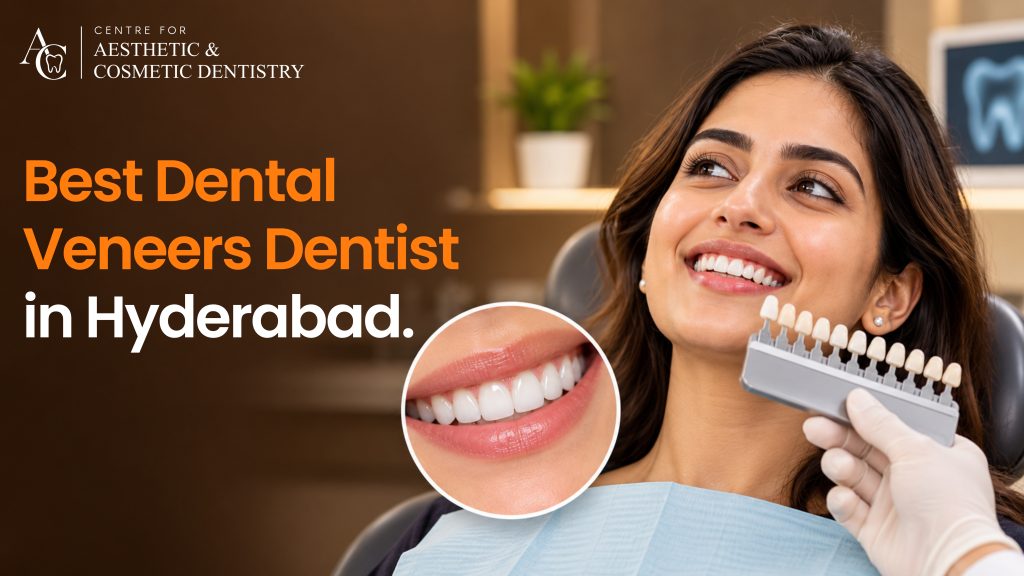
Finding the best dental veneers dentist in Hyderabad is an important first step towards achieving a smile that looks natural and complements your facial features. Custom veneers are designed to improve selected aspects of your teeth while considering your smile line, tooth proportions, and personal preferences.
Whether you want to correct discolouration, improve tooth shape, or create a more balanced smile, a personalised veneer treatment plan can help you understand the options available. This guide explains how dental veneers work, who can benefit from them, the treatment process, and what to consider before choosing a cosmetic dentist in Hyderabad.
What Are Dental Veneers?
Dental veneers are thin, custom-made coverings placed on the front surfaces of selected teeth. They are designed to improve the appearance of teeth by changing their colour, shape, size, or visible alignment.
Veneers are commonly made from porcelain or composite resin. The material and design are selected according to your dental condition, aesthetic goals, and the recommendations of your dentist.
Unlike general teeth whitening, which changes the shade of natural tooth enamel, veneers can address several cosmetic concerns at once. However, they are not suitable for every patient and may require some preparation of the natural tooth.
Why Consider Custom Dental Veneers in Hyderabad?
Every smile is different. Custom veneers are planned to suit your individual teeth rather than applying a standard shape or shade to everyone.
Here are some reasons patients consider veneers:
1. Improve Stubborn Tooth Discolouration
Some stains do not respond adequately to regular cleaning or professional whitening. Veneers may help improve the visible colour of teeth affected by certain types of intrinsic discolouration, provided the teeth are otherwise suitable.
Your dentist should first identify the cause of the staining and discuss whether whitening, microabrasion, bonding, or veneers would be the more conservative choice.
2. Correct Chipped or Worn Teeth
Small chips, worn edges, and minor shape irregularities can affect the appearance of a smile. Custom veneers may restore a more even-looking surface and improve tooth proportions in selected cases.
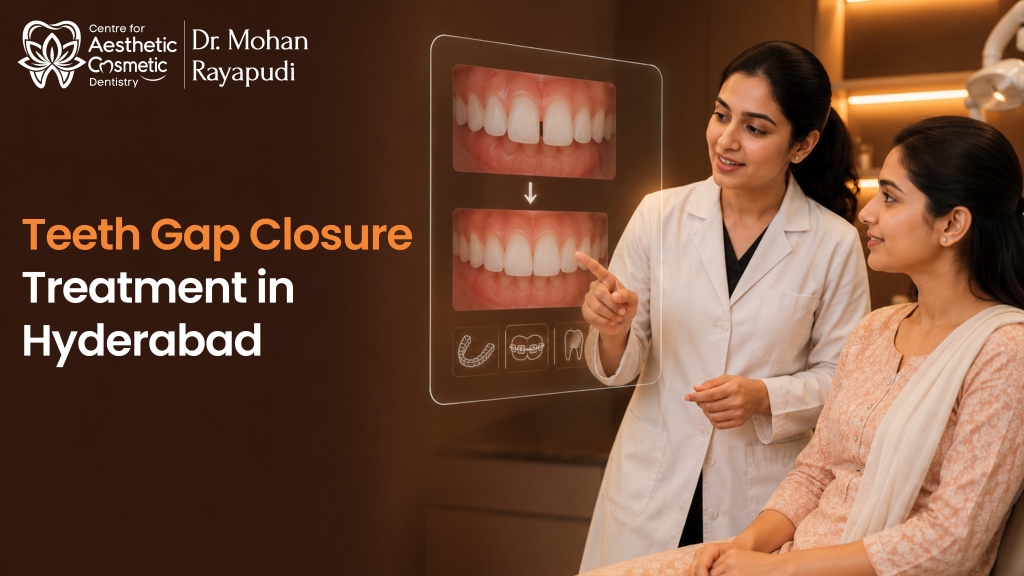
3. Close Small Gaps Between Teeth
Veneers can sometimes improve the appearance of small spaces between front teeth. However, orthodontic treatment may be more appropriate when gaps are larger or caused by underlying alignment or bite problems.
4. Improve Uneven Tooth Shapes
Teeth that appear too short, narrow, or irregularly shaped may benefit from carefully designed veneers. The dentist considers the relationship between neighbouring teeth and the overall smile to create a balanced appearance.
5. Create a More Harmonious Smile
Veneers can be planned around factors such as tooth length, width, shade, and symmetry. The goal is not simply to create very white teeth, but to achieve an appearance that suits your facial features and looks natural.
Types of Dental Veneers: Which Option Is Right for You?
The two commonly discussed veneer materials are porcelain and composite resin. Each has different characteristics, and the right choice depends on your needs and oral health.
| Feature | Porcelain veneers | Composite veneers |
|---|---|---|
| Material | Dental porcelain | Tooth-coloured composite resin |
| Appearance | Can closely resemble natural enamel | Can provide an aesthetic tooth-coloured finish |
| Stain resistance | Generally more resistant to staining | More susceptible to staining over time |
| Treatment process | Usually involves laboratory fabrication | Often placed directly or through a laboratory process |
| Repair | Repair can be more complex | Minor repairs may be possible |
| Suitability | Depends on tooth condition and treatment goals | Depends on the size and nature of the cosmetic concern |
Your dentist will explain the benefits and limitations of each option. Veneers are not automatically the best solution for every cosmetic concern. In some cases, teeth whitening, bonding, orthodontics, or restorative treatment may preserve more natural tooth structure.
Who Is a Good Candidate for Dental Veneers?
Veneers may be suitable for adults who want to improve the appearance of their front teeth and have good underlying oral health.
You may be considered for veneers if you have:
- Stubborn discolouration that does not respond well to whitening.
- Minor chips, cracks, or worn edges.
- Small gaps between selected teeth.
- Uneven tooth shapes or proportions.
- Cosmetic concerns involving the visible surfaces of front teeth.
However, healthy gums and sufficient tooth structure are important. Patients with untreated cavities, active gum disease, severe tooth wear, or significant bite problems may need other treatment first.
People who frequently grind or clench their teeth may also require additional assessment and protective measures. Veneers can be damaged by excessive biting forces, so the dentist should evaluate these habits before recommending treatment.
How Does the Dental Veneers Procedure Work?
Understanding the treatment stages can help you feel more comfortable when planning your smile transformation. The exact process varies depending on the type of veneer and the condition of your teeth.
Step 1: Smile Consultation and Dental Examination
The process begins with a discussion about what you want to change. Your dentist examines your teeth, gums, bite, and existing restorations.
They may also take photographs, digital scans, or other diagnostic records to evaluate your smile. If there are cavities or gum concerns, these may need to be treated before cosmetic work begins.
Step 2: Smile Design and Treatment Planning
Your dentist plans the proposed veneer shape, size, and shade according to your facial features and natural tooth proportions.
Depending on the case, a digital preview or mock-up may help you understand the proposed appearance. These tools support communication and planning, but they cannot guarantee an identical final result.
Step 3: Tooth Preparation
Some porcelain veneer treatments require a small amount of enamel to be reshaped so that the veneers fit naturally. The amount of preparation varies by case.
Certain minimally prepared or no-preparation options may be possible for selected patients, but they are not suitable for everyone. Your dentist should explain whether the procedure is reversible and how much natural tooth structure may need to be altered.
Step 4: Impressions or Digital Scans
Records of your teeth are used to create custom veneers. Porcelain veneers are generally fabricated outside the mouth, while composite veneers may be placed directly or made using a laboratory process.
Temporary restorations may be provided in some cases while permanent veneers are being prepared.
Step 5: Veneer Placement
Once the veneers are ready, your dentist checks their fit, shape, colour, and appearance. The veneers are then bonded to the prepared teeth using dental materials and techniques appropriate to the case.
The dentist makes final adjustments to ensure comfortable biting and a natural-looking result.
Step 6: Follow-Up and Maintenance
A review appointment may be recommended to check comfort, bite, and gum response. Your dentist will explain how to care for your veneers and when to return for routine check-ups.
How to Choose the Best Dental Veneers Dentist in Hyderabad
The success of cosmetic dentistry depends on more than the material used. Careful diagnosis, treatment planning, tooth preparation, bonding, and follow-up all contribute to the outcome.
When comparing cosmetic dentists in Hyderabad, consider these factors:
Experience in cosmetic dentistry: Ask about the dentist’s experience with porcelain and composite veneers and their approach to different smile concerns.
Personalised smile planning: A good treatment plan should consider your facial features, natural tooth proportions, gum line, and bite rather than recommending identical-looking veneers for every patient.
Conservative treatment philosophy: Ask how much natural tooth structure may need to be removed and whether alternatives such as whitening or bonding could address your concern.
Material and laboratory quality: Understand which veneer material is recommended and how the dentist ensures an appropriate fit, shade, and finish.
Clear communication: Your dentist should explain the treatment stages, limitations, maintenance needs, and possible risks before you make a decision.
Follow-up care: Veneers need regular dental reviews and good oral hygiene. Choose a provider who explains long-term maintenance rather than focusing only on the initial cosmetic result.
For patients exploring cosmetic dental treatments, the Center for Cosmetic & Aesthetic Dentistry by Dr Mohan Rayapudi focuses on aesthetic dental care and personalised smile improvement.
The clinic has treated 50000+ Happy Patients, and reflects its stated patient experience. Patients considering veneers should get a consultation to discuss their specific concerns, suitability, and treatment choices.
With 2 clinics in Hyderabad at Kondapur, Kukatpally, patients can enquire about consultation arrangements and the veneer options available at the clinic.
A personalised consultation is important because the best veneer design depends on your existing teeth, gum health, bite, and expectations. Your dentist can help determine whether porcelain veneers, composite veneers, or a more conservative treatment would be appropriate.
How Long Do Dental Veneers Last?
The lifespan of veneers varies according to the material, quality of placement, oral hygiene, bite forces, and daily habits.
Porcelain veneers can last many years with appropriate care, while composite veneers may require more frequent maintenance or replacement. Neither option should be considered permanent or maintenance-free.
To protect your veneers:
- Brush twice daily with a soft-bristled toothbrush and fluoride toothpaste.
- Clean between your teeth every day.
- Avoid biting hard objects such as ice or pens.
- Do not use your teeth to open packaging.
- Wear a dentist-recommended night guard if you grind your teeth.
- Attend regular dental check-ups and professional cleanings.
Contact your dentist if a veneer feels loose, develops a sharp edge, chips, or causes discomfort when biting.
Dental veneers can improve the appearance of selected teeth by addressing concerns such as discolouration, chips, small gaps, and uneven shapes. However, achieving a natural-looking smile requires careful planning and a treatment approach that protects your oral health.
If you are searching for the best dental veneers dentist in Hyderabad, begin with a consultation to discuss your expectations, examine your dental condition, and compare suitable treatment options. Custom veneers should complement your natural features while supporting long-term dental health.
With the right diagnosis, thoughtful smile design, and consistent maintenance, you can take an informed step towards a smile that feels comfortable, balanced, and confident.
Frequently Asked Questions
1. Are dental veneers painful?
The procedure is generally performed with local anaesthesia when tooth preparation is needed. Some patients may experience temporary sensitivity afterwards. Your dentist will explain what to expect based on the planned procedure.
2. Do veneers look natural?
Well-planned veneers can closely resemble natural teeth. Their appearance depends on the material, shade selection, shape, fit, and the dentist’s treatment planning.
3. Are porcelain veneers better than composite veneers?
Neither option is best for everyone. Porcelain generally offers greater stain resistance, while composite veneers may be easier to repair in selected situations. Your dentist can recommend an option based on your cosmetic goals and dental condition.
4. Can veneers fix crooked teeth?
Veneers may improve the appearance of minor irregularities in selected cases. However, significant crowding or bite problems are usually better assessed for orthodontic treatment rather than being concealed with veneers.
5. Do dentists need to shave natural teeth for veneers?
Some veneers require a small amount of enamel removal, while selected cases may qualify for minimal-preparation options. The amount depends on tooth position, shape, and the type of veneer being planned.