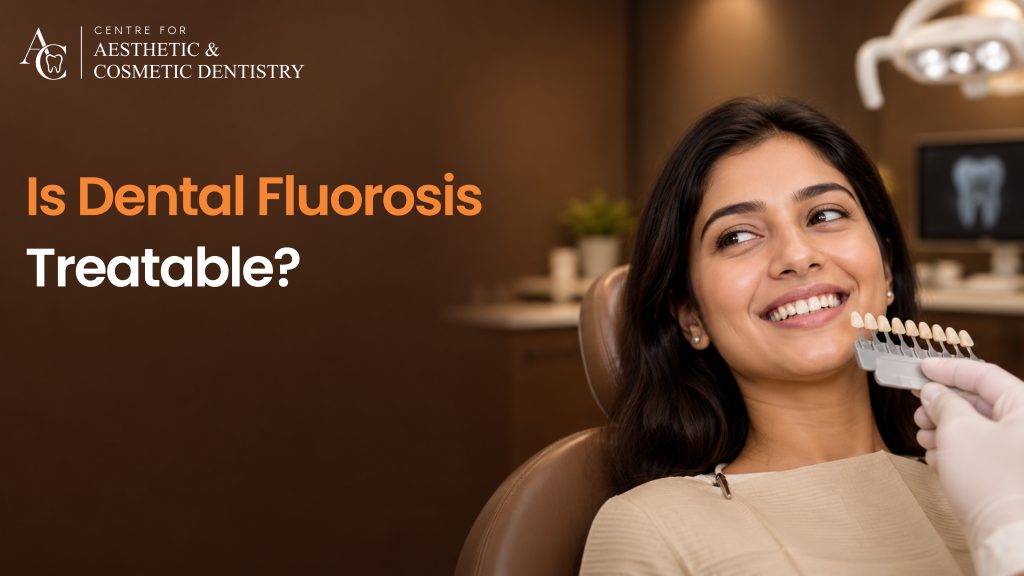
Noticing white patches, yellowish marks, or brown stains on your teeth can make you feel self-conscious about your smile. These changes may sometimes be caused by dental fluorosis, a condition that develops when teeth are exposed to excessive fluoride while they are forming. The good news is that dental fluorosis is treatable, and several cosmetic dental procedures can improve the appearance of affected teeth.
The most suitable treatment depends on the severity of fluorosis, the depth and colour of the stains, the condition of the enamel, and your smile goals. Mild cases may need only conservative cosmetic procedures, while more noticeable discolouration may require a combination of treatments.
If you are wondering whether dental fluorosis can be removed permanently, whether stained teeth can become whiter, or which treatment is right for you, this guide explains the available options and what to expect.
What Is Dental Fluorosis?
Dental fluorosis is a change in the appearance of tooth enamel caused by excessive fluoride intake during the years when permanent teeth are developing. It usually occurs in childhood, before the teeth emerge into the mouth.
Fluoride in appropriate amounts helps strengthen enamel and protect teeth against decay. However, consuming too much fluoride during enamel formation can affect how the enamel develops, resulting in visible changes.
Dental fluorosis is not contagious, and it is generally a cosmetic concern in mild cases. The appearance can range from faint white lines or cloudy patches to more prominent brown discolouration and surface irregularities in severe cases.
Importantly, fluorosis affects the appearance and structure of developing enamel. It is different from ordinary stains caused by coffee, tea, tobacco, or certain foods.
Is Dental Fluorosis Treatable?
Yes, dental fluorosis is treatable. Although the changes to enamel formed during childhood cannot simply be reversed, cosmetic dental treatments can improve the appearance of affected teeth.
Treatment does not necessarily mean removing all the enamel or covering every tooth. In mild cases, a conservative procedure may be enough to make the white patches less noticeable. More severe cases may need restorative options to improve colour, shape, and surface appearance.
A dentist will first identify whether the discolouration is actually caused by fluorosis. Other conditions, including early enamel defects, developmental abnormalities, and staining, can sometimes look similar. An accurate diagnosis helps avoid unnecessary treatment.
The goal is to select the least invasive option that can achieve a satisfactory and natural-looking result while preserving as much healthy tooth structure as possible.
What Does Dental Fluorosis Look Like?
The appearance of fluorosis varies according to the amount of fluoride exposure during tooth development and the effect on the enamel.
Mild Dental Fluorosis
Mild fluorosis may appear as small white spots, fine white lines, or faint cloudy patches. These changes are often visible only under certain lighting conditions and may not affect the tooth’s surface texture.
Moderate Dental Fluorosis
Moderate fluorosis can involve more noticeable white or opaque areas, sometimes accompanied by yellowish or brown staining. The contrast between affected and unaffected enamel may make the teeth appear uneven in colour.
Severe Dental Fluorosis
Severe fluorosis may cause extensive brown discolouration, enamel pitting, and surface irregularities. In these cases, treatment may involve more than simply improving tooth colour because the enamel structure itself can be affected.
Best Treatment Options for Dental Fluorosis and Stained Teeth
There is no single treatment that works for every case. Your dentist will consider the severity of fluorosis, the condition of your enamel, the number of affected teeth, and your desired cosmetic outcome.
1. Teeth Whitening
Professional teeth whitening may help improve general tooth colour and reduce certain types of staining. However, fluorosis-related white patches do not always respond predictably to whitening.
In some cases, whitening can make the contrast between white fluorosis marks and the surrounding enamel more noticeable. For this reason, a dentist should assess the pattern of discolouration before recommending bleaching.
Professional whitening is different from using unregulated whitening products at home. A dentist can select an appropriate method and explain the likely result and limitations.
2. Enamel Microabrasion
Enamel microabrasion is a conservative cosmetic procedure used for selected superficial enamel defects and discolouration.
During the procedure, the dentist carefully removes a very thin outer layer of affected enamel using specialised materials. This may reduce the visibility of shallow white or brown spots.
Microabrasion is generally more suitable for mild, superficial fluorosis. It may not be sufficient for deep stains or extensive enamel defects. The dentist must assess enamel thickness and the depth of the affected area before proceeding.
3. Dental Resin Infiltration
Resin infiltration is a minimally invasive technique used in selected cases of white spot lesions. A specialised resin penetrates porous areas of enamel and changes the way light passes through them, helping reduce the contrast between the affected and surrounding enamel.
It may be considered for certain mild fluorosis-related white spots, depending on their appearance and depth.
Resin infiltration is not appropriate for every type of fluorosis. The dentist will determine whether the enamel characteristics are suitable and explain what level of cosmetic improvement may be realistic.
4. Composite Bonding
Composite bonding uses tooth-coloured dental resin to improve the appearance of teeth. It can help mask discolouration, repair minor surface irregularities, and improve tooth shape.
The dentist selects a shade that blends with the surrounding teeth and carefully applies and shapes the composite material.
Bonding may be useful for selected moderate cases, but it requires maintenance. Composite can stain, chip, or wear over time, so periodic polishing or repair may be needed.
5. Porcelain Veneers
Porcelain veneers are thin, custom-made restorations bonded to the front surfaces of teeth. They can improve the appearance of persistent stains, uneven colour, and certain shape irregularities.
Veneers may be considered when fluorosis is more pronounced and conservative options are unlikely to provide the desired appearance. Depending on the case, some enamel preparation may be necessary.
Because veneers involve a restorative commitment and may require alteration of natural tooth structure, they should be considered only after discussing less invasive alternatives.
6. Dental Crowns
Dental crowns cover the visible portion of a tooth and can restore its shape, strength, and appearance. They may be considered in selected severe cases where enamel is significantly compromised or the tooth has additional structural problems.
Crowns generally require more tooth preparation than treatments such as microabrasion or bonding. They are not usually the first choice for mild fluorosis that affects appearance alone.
Comparing Dental Fluorosis Treatment Options
The following table gives a general overview of commonly considered treatments. The right option depends on an individual dental examination.
| Treatment | Commonly considered for | Tooth preparation |
|---|---|---|
| Professional whitening | General discolouration and selected staining | No significant enamel removal |
| Enamel microabrasion | Superficial white or brown enamel marks | Very small amount of outer enamel removed |
| Resin infiltration | Selected porous white spot lesions | Minimally invasive |
| Composite bonding | Localised stains and minor surface defects | Often minimal, depending on the case |
| Porcelain veneers | More noticeable persistent discolouration and cosmetic concerns | May require enamel preparation |
| Dental crowns | Selected severe cases with structural damage | More extensive tooth preparation |
Your dentist may recommend one procedure or combine treatments. For example, selected cases may benefit from microabrasion followed by another cosmetic approach. Treatment should be planned around enamel preservation and realistic expectations.
Which Dental Fluorosis Treatment Is Best for You?
The best treatment depends on the type and severity of the enamel changes.
For mild white patches, resin infiltration or microabrasion may be considered. If the main concern is overall tooth colour, professional whitening may be discussed, although it does not reliably remove fluorosis marks. Moderate discolouration may respond to carefully selected bonding or a combination of conservative procedures.
For more extensive staining or enamel defects, veneers or crowns may be considered after evaluating the amount of healthy tooth structure remaining.
A cosmetic dentist should explain the benefits, limitations, maintenance needs, and possible risks of each option. Avoid choosing a treatment solely because it promises instant whitening. A natural-looking result should also preserve healthy enamel and support long-term oral health.
Why Does Dental Fluorosis Develop?
Fluorosis develops when a child consumes excessive fluoride while permanent teeth are forming beneath the gums. Possible sources include drinking water with naturally high fluoride levels, swallowing toothpaste regularly, and taking fluoride supplements when they are not needed.
The risk depends on the amount of fluoride consumed, the duration of exposure, and the child’s stage of tooth development.
It is important to remember that fluoride itself is not harmful when used appropriately. Fluoride toothpaste and professionally recommended fluoride treatments help prevent tooth decay. The concern is excessive ingestion during the years when enamel is developing.
Can Dental Fluorosis Be Prevented?
The enamel changes caused by fluorosis occur during childhood, so prevention focuses on managing fluoride exposure while permanent teeth are developing.
Parents can help by supervising children during brushing, using an age-appropriate amount of fluoride toothpaste, and encouraging children to spit rather than swallow toothpaste. Fluoride supplements should be used only when recommended by a dental or healthcare professional.
If your household uses groundwater, you may also consider testing its fluoride concentration, particularly in areas where naturally high fluoride levels are a concern. A dentist can advise whether additional preventive measures are appropriate.
Once fluorosis has developed, cosmetic treatment may improve its appearance, but prevention remains the best way to avoid further cases in younger children.
Choosing Cosmetic Dental Care in Hyderabad
If fluorosis stains are affecting your confidence, a professional cosmetic dental assessment can help you understand the available options. The first step is to identify the cause and severity of the discolouration before selecting a treatment.
The Center for Cosmetic & Aesthetic Dentistry by Dr Mohan Rayapudi focuses on cosmetic dental concerns and smile improvement. A consultation can help you discuss whether whitening, microabrasion, resin infiltration, bonding, veneers, or another approach may be suitable for your teeth.
The clinic has 2 branches in Hyderabad at Kondapur, Kukatpally and known for treating 50000+ Happy Patients. Patients can discuss their concerns and understand the treatment process before deciding on a procedure.
When choosing a cosmetic dentist, look for a clear explanation of the diagnosis, a treatment plan suited to your enamel condition, and realistic information about expected results and maintenance.
What to Expect During a Dental Fluorosis Consultation
A consultation generally begins with an examination of your teeth and gums. The dentist evaluates the colour, distribution, and depth of the enamel changes, along with any surface irregularities.
They may ask about your childhood dental history, fluoride exposure, drinking water, and previous whitening or cosmetic procedures. Photographs or other diagnostic records may be taken when useful for treatment planning.
The dentist then explains the possible options, including whether a conservative treatment is likely to be effective. You should also discuss the number of appointments, expected outcome, maintenance, and any limitations.
A good treatment plan does not promise to make every tooth look identical. Instead, it aims to improve the overall appearance while respecting the natural characteristics and health of your teeth.
Dental fluorosis can make teeth appear uneven, spotted, or discoloured, but it does not mean you have to live with a smile you feel uncomfortable showing. Several cosmetic treatment options can improve the appearance of affected teeth, ranging from conservative enamel procedures to restorative solutions for more extensive cases.
The key is to identify the severity of fluorosis and choose a treatment that balances cosmetic improvement with the preservation of healthy enamel.
At the Center for Cosmetic & Aesthetic Dentistry by Dr Mohan Rayapudi, you can discuss your concerns, explore suitable treatment options, and understand what kind of results may be realistic for your smile.
Ready to take the next step? Schedule a cosmetic dental consultation today. Get your teeth assessed, ask questions about the available treatments, and discover a personalised approach to achieving a healthier-looking, more confident smile.
Frequently Asked Questions
1. Is dental fluorosis permanently treatable?
Fluorosis-related enamel changes cannot be reversed biologically once the teeth have developed. However, cosmetic treatments such as microabrasion, resin infiltration, bonding, and veneers can improve their appearance.
2. Can teeth whitening remove dental fluorosis?
Professional whitening may improve general tooth colour, but it does not reliably remove fluorosis marks. In some cases, whitening may make white patches more noticeable. A dentist should assess the teeth before recommending it.
3. What is the best treatment for white spots caused by fluorosis?
For selected mild cases, enamel microabrasion or resin infiltration may help reduce the appearance of white spots. The best option depends on the depth and characteristics of the affected enamel.
4. Can dental fluorosis be treated without veneers?
Yes. Many mild and some moderate cases can be managed with conservative options such as microabrasion, resin infiltration, or composite bonding. Veneers are not necessary for every patient.
5. Is dental fluorosis harmful to teeth?
Mild fluorosis is usually mainly a cosmetic concern. Severe fluorosis can involve enamel pitting and structural changes, which may require restorative care. A dentist can assess whether the enamel is healthy and sufficiently strong.