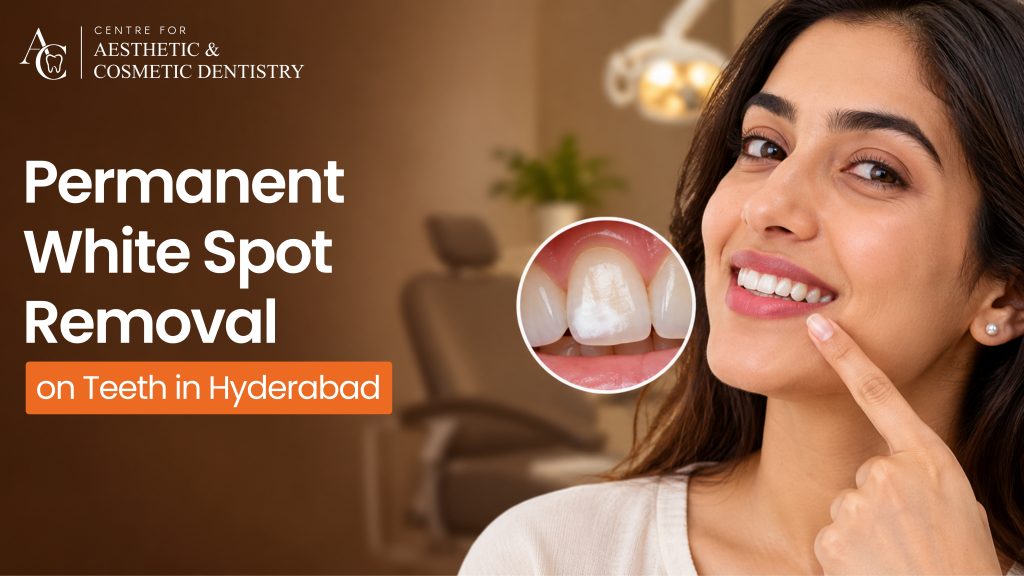
Have you noticed white spots or patches on your teeth that do not disappear even after brushing? These marks can make your smile look uneven and may affect your confidence, especially when they appear on the front teeth. While white spots are often harmless, they can sometimes indicate changes in the tooth enamel that need professional attention.
If you are looking for permanent white spot removal on teeth in Hyderabad, the good news is that modern cosmetic dentistry offers several treatment options. Depending on the cause, depth, and severity of the spots, a dentist may recommend resin infiltration, enamel microabrasion, professional whitening, composite bonding, or porcelain veneers.
The important thing is to identify why the spots have developed before choosing a treatment. This guide explains the common causes of white spots, available treatment options, and how to choose the right cosmetic dentist in Hyderabad.
What Are White Spots on Teeth?
White spots are areas of the tooth enamel that appear lighter or more opaque than the surrounding surface. They may look like small dots, chalky patches, lines, or larger irregular areas.
Healthy enamel is usually translucent. When its mineral content or structure changes, the way light reflects from the surface can also change, making certain areas appear white.
White spots may affect one tooth or several teeth. They are commonly noticed on the front teeth because these surfaces are more visible when smiling or speaking.
Although many white spots are primarily cosmetic, some may be associated with early enamel damage. A dental examination helps determine whether the issue is purely aesthetic or requires preventive treatment as well.
What Causes White Spots on Teeth?
White spots can develop for different reasons. Identifying the cause is essential because not every type of white patch responds to the same treatment.
1. Dental Fluorosis
Dental fluorosis develops when a child consumes excessive fluoride while permanent teeth are forming. It can cause white lines, cloudy patches, or brown discoloration, depending on the severity.
Mild fluorosis often appears as faint white marks, while more severe cases may involve enamel pitting and structural changes.
2. Enamel Demineralisation
Demineralisation occurs when minerals are lost from the enamel. It can happen when plaque bacteria produce acids that weaken the tooth surface.
White spots associated with demineralisation may appear near the gumline or around orthodontic brackets. These can be early signs of tooth decay and should be assessed by a dentist.
3. Poor Oral Hygiene During Braces Treatment
Food particles and plaque can collect around braces if teeth are not cleaned thoroughly. This may lead to mineral loss and white spots around the areas previously covered by brackets.
These marks can become noticeable after braces are removed.
4. Enamel Hypoplasia
Enamel hypoplasia is a developmental condition in which the enamel does not form to its normal thickness. It may create white, yellow, or brown patches, grooves, or pits.
The appearance and treatment depend on how much enamel has been affected.
5. Dry Mouth and Dietary Habits
Reduced saliva flow can increase the risk of enamel demineralisation because saliva helps neutralise acids and support the natural repair process.
Frequent consumption of sugary or acidic foods and drinks may also contribute to enamel problems, particularly when oral hygiene is inadequate.
Can White Spots on Teeth Be Removed Permanently?
In many cases, the appearance of white spots can be significantly reduced or concealed with appropriate dental treatment. However, the result depends on the underlying cause and the condition of the enamel.
Some treatments modify the appearance of the affected enamel, while others cover the visible marks with restorative materials. Not every procedure permanently removes the underlying enamel change.
For example, resin infiltration can reduce the contrast of selected white spots, while veneers can cover more extensive discolouration. A dentist should explain the likely durability, maintenance requirements, and limitations of each option.
It is also important to distinguish between cosmetic white spots and active demineralisation. If the spots are related to early decay, controlling the cause and protecting the enamel may be necessary before cosmetic treatment.
Best Treatment Options for White Spot Removal on Teeth
Modern cosmetic dentistry offers several approaches to improve the appearance of white spots. Your dentist will select a treatment based on the depth, location, and cause of the marks.
1. Resin Infiltration
Resin infiltration is a minimally invasive procedure used for selected white-spot lesions.
The dentist prepares the affected enamel surface and applies a specialised resin that penetrates the porous area. Once treated and hardened, the resin changes how light passes through the enamel, helping the white spot blend more naturally with the surrounding tooth.
Benefits include:
- Minimal removal of natural tooth structure in suitable cases.
- Improved appearance of selected white spots.
- No need for conventional crowns or veneers in many suitable cases.
Resin infiltration is not suitable for every type of enamel defect. Deep or structurally damaged areas may require a different approach.
2. Enamel Microabrasion
Enamel microabrasion is a conservative cosmetic technique used for certain superficial enamel stains and white patches.
A dentist applies a controlled abrasive and acidic preparation to remove a very thin layer of the outer enamel. This can help reduce the appearance of superficial discolouration.
Microabrasion is generally more suitable for shallow defects. It may not provide the desired improvement when spots extend deeper into the enamel.
3. Professional Teeth Whitening
Professional teeth whitening may be considered when white spots appear alongside general tooth discolouration.
Whitening lightens the surrounding natural tooth shade, which can sometimes improve overall colour balance. However, it does not directly remove white spots. In certain cases, whitening may temporarily make them more noticeable.
Your dentist can assess whether whitening should be used alone or combined with another cosmetic procedure.
4. Composite Bonding
Composite bonding involves applying a tooth-coloured resin material to the affected surface to improve its appearance.
The dentist selects a suitable shade and carefully shapes the material so it blends with the surrounding teeth. Bonding may be useful for localised white patches, surface irregularities, or selected enamel defects.
It can often be completed with limited tooth preparation, depending on the case. However, composite material may stain, chip, or wear over time and may need maintenance.
5. Porcelain Veneers
Porcelain veneers are thin, custom-made shells that cover the front surfaces of teeth. They may be considered when white spots are extensive, persistent, or associated with other cosmetic concerns.
Veneers can provide a more uniform appearance by covering the visible enamel surface. However, the procedure usually requires some enamel preparation, which may be irreversible.
They are generally not the first choice for minor white spots that could be treated conservatively.
6. Fluoride and Remineralisation Treatments
When white spots are associated with early enamel demineralisation, a dentist may recommend fluoride applications or other remineralisation measures.
These approaches help support enamel health and may improve the appearance of some early lesions over time. They do not necessarily eliminate established developmental white spots or deeper enamel defects.
Your dentist may also recommend changes to brushing habits, diet, and plaque control to prevent further mineral loss.
Comparing White Spot Removal Treatments
The following table provides a general overview of common treatment options. The right choice depends on the diagnosis and your cosmetic goals.
| Treatment | Commonly suitable for | Tooth preparation |
|---|---|---|
| Resin infiltration | Selected porous white spots | Minimal |
| Enamel microabrasion | Superficial enamel discolouration | Very thin surface enamel removal |
| Professional whitening | General tooth discolouration | No significant enamel removal |
| Composite bonding | Localised spots and surface defects | Often minimal, case-dependent |
| Porcelain veneers | More extensive cosmetic concerns | Usually requires enamel preparation |
| Remineralisation | Early enamel demineralisation | Non-invasive |
How to Choose the Best White Spot Removal Dentist in Hyderabad
Selecting the right dentist is important because white spots can have different causes and may require very different treatments. A procedure that works well for one person may not be appropriate for another.
Here are some factors to consider when choosing a cosmetic dentist.
Experience in Cosmetic and Aesthetic Dentistry
Look for a dentist who understands enamel defects, tooth discolouration, and smile aesthetics. Ask which treatments may be appropriate for your specific condition and why.
Proper Diagnosis Before Treatment
A thorough examination should come before any cosmetic procedure. Your dentist may assess the tooth surface, check for signs of decay, review your dental history, and take photographs or other diagnostic records where appropriate.
Preference for Conservative Treatment
Whenever possible, preserving natural tooth structure is an important consideration. Ask whether options such as resin infiltration or microabrasion could help before considering procedures that require greater tooth preparation.
Clear Explanation of Results and Maintenance
Discuss how much improvement is realistic, how long the treatment may take, and whether maintenance or future replacement may be required. A responsible dentist should explain both the benefits and limitations of the recommended procedure.
White Spot Removal at Center for Cosmetic & Aesthetic Dentistry
Patients looking for cosmetic solutions for white spots can consider a consultation at the Center for Cosmetic & Aesthetic Dentistry by Dr Mohan Rayapudi.
The clinic can help patients understand the possible causes of tooth discolouration and explore suitable cosmetic treatment options based on an individual dental assessment. Its patient-care milestone includes 50000+ Happy Patients, reflecting its experience in caring for dental patients.
For convenience, patients can access care through 2 clinics in Hyderabad at Kondapur, Kukatpally.
A consultation is an opportunity to discuss your concerns, understand the condition of your enamel, and compare treatment options. The dentist can explain whether a minimally invasive approach may be sufficient or whether a restorative cosmetic procedure should be considered.
What to Expect During a White Spot Removal Consultation
Your first appointment generally focuses on identifying the cause of the white spots and understanding your expectations.
The dentist may begin by asking when you first noticed the marks, whether they have changed over time, and whether you have previously worn braces or received dental treatment.
Next, the teeth and gums are examined to assess enamel condition, spot distribution, and possible signs of decay. Depending on the findings, diagnostic photographs or other investigations may be recommended.
The dentist then discusses appropriate treatment options, including their likely benefits, limitations, cost considerations, and maintenance needs. You can ask questions before deciding whether to proceed.
How to Prevent New White Spots on Teeth
Although developmental enamel changes cannot always be prevented after teeth have formed, good oral care can reduce the risk of new white spots caused by demineralisation.
Brush twice daily with fluoride toothpaste, clean between your teeth, and attend regular dental check-ups. Limit frequent sugary and acidic snacks, and drink water throughout the day.
If you wear braces or clear aligners, follow your dentist’s cleaning instructions carefully. Patients with dry mouth should discuss possible causes and preventive strategies with their dentist.
Avoid abrasive home remedies, lemon juice, baking soda mixtures, or unverified whitening products. These can irritate gums or damage enamel rather than safely treating white spots.
White spots on your teeth do not have to remain a source of embarrassment. Modern cosmetic dentistry offers several ways to improve their appearance, from conservative enamel treatments to advanced restorative options.
The best results begin with an accurate diagnosis. Understanding whether your white spots are caused by fluorosis, demineralisation, or another enamel condition helps your dentist recommend a treatment that balances appearance with long-term oral health.
If you are considering permanent white spot removal on teeth in Hyderabad, schedule a consultation at the Center for Cosmetic & Aesthetic Dentistry by Dr Mohan Rayapudi. Discuss your smile concerns, explore the available options, and take an informed step towards a more even-looking, confident smile.
Frequently Asked Questions
1. Can white spots on teeth be removed permanently?
Their appearance can often be significantly reduced or concealed with suitable cosmetic treatment. However, the outcome and durability depend on the cause and depth of the spots. Some treatments may require maintenance.
2. Which treatment is best for white spots on front teeth?
Resin infiltration, microabrasion, composite bonding, and veneers may be considered depending on the type and severity of the spots. A dentist should examine the enamel before recommending a procedure.
3. Does teeth whitening remove white spots?
No. Whitening lightens the natural tooth shade but does not directly remove white spots. It may improve overall colour balance in selected cases, although it can sometimes make white patches more visible.
4. Is resin infiltration painful?
Resin infiltration is generally minimally invasive and often does not require injections. The experience depends on the condition of the tooth and the treatment approach used.
5. Are white spots on teeth a sign of tooth decay?
Not always. White spots can result from fluorosis, developmental enamel defects, or demineralisation. Some demineralised white spots may be early signs of decay, so a dental examination is important.